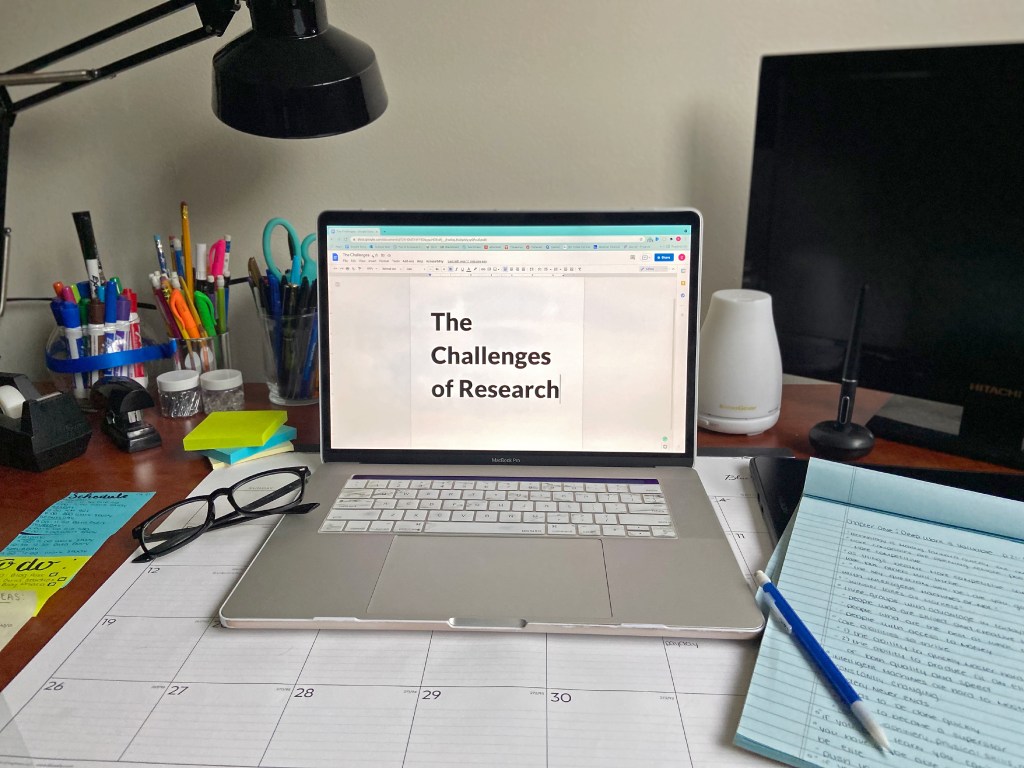
There comes a time in the life of professionals when they are tasked with mastering a certain subject or practice, whether you are a student, a professor, a scientist, or a business professional. But how does one achieve mastery? Where do they start with their research? And how do they make the most of the information they find? These are all common questions that are asked when starting research, and questions that I have asked myself. The answers exist in the process of deep work and concentration.
Researching is not a simple task and maintaining focus while conducting research can make it even more challenging. This is because technology has programmed our brains to desire and expect change and new stimuli constantly. Our attention spans have become so short that focusing on one task for an extended period of time can be difficult. This is exactly what author Michael Harris discusses in the article, “I Have Forgotten How to Read.” This concept is something that I can directly relate to as a college student. After being assigned a reading I often find myself staring blankly at a page while my mind wanders off. When I reach the bottom of the page I have no idea what I’ve just read. It is important to separate yourself from any possible distractions and take on a different mindset and focus when conducting research through deep work. This is when you are able to maintain a deep concentration on your research and truly take in all of the information that is in front of you.
Part of researching is being able to retain and maximize the information that you come across. In order to do this, you have to be able to actively read and interact with the material. The article, “How to Remember What You Read” defines active readers as “having a plan for recording, reflecting on, and putting into use the conclusions they draw from the information they consume.” In simple terms, active readers are able to maximize the information they read by strategizing different ways to engage with the information through taking notes and going over what they have read. For example, I am able to remember the information from a lecture better when the professor uses interactive methods like a game or competition to present and go over information rather than just talking to the class. This is because the competition requires students to interact with the information and actively learn. Using active researching methods will maximize the time and efforts that you spend.
Furthermore, when we research it is important to utilize our complete cognitive ability so we can effectively learn the information. However, our cognitive ability is negatively affected by our smartphones. Simply by having them in our pocket or bag, or even having them face down on a table decreases our cognitive ability and distracts our focus and learning. In the article, “Having Your Smartphone Nearby Takes a Toll on Your Thinking” the authors state, “cognitive ability is critical for helping us learn, reason, and develop creative ideas…the mere presence of our smartphones can adversely affect our ability to think and problem solve — even when we aren’t using them.” To be able to develop and execute strong research we need to walk away from smartphones for a while and maximize our cognitive ability.
Producing high-quality work and research may seem like a daunting task at times, but through the intense focus and concentration of deep work, it is entirely achievable. The next time you have to conduct research, practice different methods, and observe which ones work best for you. There is no one cookie-cutter method that works for everyone. It may be a combination of a number of different factors, but you have to learn what is best for you and do that. Try your best to maintain a deep focus, put away the smartphone, and actively read and see how effectively it works for you!
 CRyder Design
Leave a comment