
In the modern job market, personal branding is essential. It is a professional representation of who you are. However, the reality of the situation is you can’t build your brand overnight. As simple as it may seem, there is a lot of preparation and research that needs to be conducted before even starting to develop a brand. But where do you start? Well, there is no cookie-cutter process that works for everyone, and you have to do what works best for you, but I’ve composed a few key things to keep in mind as you start your journey with your branding.
First thing’s first, probably the most important part of building your brand is researching to discover your inspiration, competition, and target audience. Research can be time-consuming and seem unnecessary, but it helps to develop the foundation upon which your professional identity will exist upon. Visual research is a key element to building your brand. Pinterest is a helpful tool that allows you to organize any inspiration into separate boards based on topics or themes. You could also create a mood board, which is a collection of anything you see as inspiration into somewhat of a collage. Wix defines a mood board as, “…a collection of visuals that serve in defining and communicating the designer’s vision of a project. Whether it is a graphic, fashion or website design project, a mood board serves as an early step in the process, before any of the actual design work, and is meant to set the tone and direction for the entirety of the project” (“How to Make the Perfect Mood Board for Your Project”). Collecting all of your ideas into one location allows you to look at all of your inspiration in one space so you can pick out key elements and features that you wish to include in your branding. Though research should not only be on a visual level. It is also important to research to pinpoint exactly what you want your brand to represent. Conducting competitor analysis and exploring what competitors are doing and analyzing their branding strategies can be beneficial for gaining an understanding of industry standards, and what strategies you want to use with your brand. The article “Competitor Analysis: How Market Research Helps You Create Your Own Competitive Advantage” states, “Focusing attention on your current and potential competition will help zero-in on specific claims that you believe distinguish your brand from its competitors. The more you can understand the brands that directly and indirectly compete in your area of business or industry, the better you’re equipped to capitalize on opportunities and mitigate the threats to your own business. That way you can ensure you are one step ahead of the game and the competition.” Once you think you’ve exhausted all resources for your research, compile it all so it can be easily accessed and viewed.

The next step is brainstorming, start to get those creative juices flowing! Though brainstorming may seem to be very elementary, it can help to uncover some great ideas and concepts. As you brainstorm, you will quickly realize that it is fairly challenging to think of deeper ideas than just what sits on the surface level. Challenge yourself to an ideation session. Grab a pencil and a sheet of paper and think of as many ideas as you possibly can in a set amount of time. I find about 10-15 minutes to be sufficient enough. Write, sketch, scribble. Put everything on paper no matter how crazy or complicated it may seem. The article, “10 Effective Brainstorming Techniques for Teams” states, “In rapid ideation, everyone writes down as many ideas as possible in a set amount of time before any ideas are discussed, critiqued, or fleshed out. For this brainstorming technique, you will need to set (and stick to) a time constraint, otherwise, you’ll risk losing the sense of urgency…By allowing everyone to capture their ideas before the critique begins, rapid ideation avoids the inevitable, premature shooting down of ideas. The time constraint can also prevent people from talking themselves out of an idea before they share it with a group—a common brainstorming mishap.” As you start to run out of ideas and can’t seem to think of anything, keep pushing yourself to get deeper, exhaust all avenues. The more you write, the more creative you will get. Once your time is up, take a moment to go over what you’ve written or sketched down. Take note of ideas that stick out to you, or things that you think could be developed into something with potential. Then, do it all again. Do this as many times as you deem necessary until you have a list of ideas you feel you can work with.
After you’ve laid out all of the groundwork for yourself, now you have to narrow things down. This can be a real challenge! You may find that you have so many ideas that you love, and want to include but it helps to narrow down elements that you connect with from your research and brainstorming sessions. Start with a color scheme. Pick out a few different colors that you feel would work well with your professional presence. Start with 4 or 5. The official Pantone website can help you choose colors and find the exact codes that go with them. Then pick out a name that you would like your brand to go by, this can be anything you choose but make sure it aligns with who you are and what you stand for. You can also research typefaces that you think would work well to represent your brand! Next is the moment you’ve probably been waiting for from the start. Designing your logo! Having a mood board, color scheme, and brand name can all help in this process. Remember, a logo plays a lot of different roles in your brand and needs to work effectively in each one. The article “How to Design a Logo: The Ultimate Guide” states, “A good logo is immediately recognizable, reflects your brand’s message, and makes you stand out. An effective logo looks professional and seamlessly fits in with a brand’s identity. A great logo also needs to work at any size and anywhere you want to use your logo.” Whether you design it on your own or outsource to work with a designer it is important to make sure your logo is simple enough to be easily recognizable but complex enough to stand out. Finally, make any revisions that would refine your branding even more and put the finishing touches on everything.
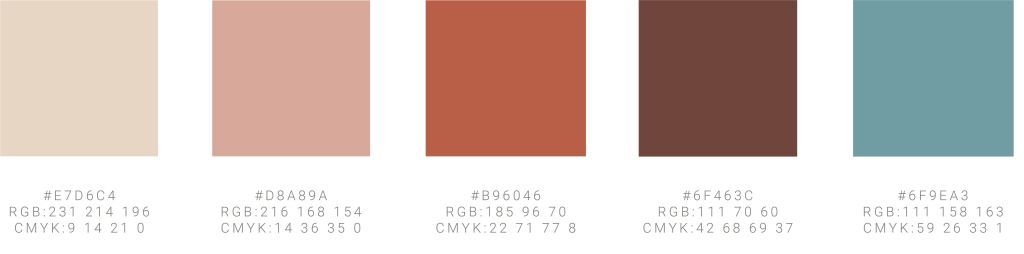

The final step is to apply your branding to any platforms that you are active on! Use your color scheme and/or logo to represent profiles, specific typefaces, and icons throughout posts, and rename profiles to align with your brand name! This process is not simple nor is it easy, but once you have developed all of your branding it is worth every step and all of the time and effort that you have put into it. Good luck, work hard, and stay creative!
 CRyder Design
Leave a comment