
Introduction
If you know anything about Design Thinking, you know it can be a lengthy process that sometimes seems neverending. If you don’t know anything about Design Thinking, check out my last blog post! Regardless, Design Thinking in a few words is a method to define a problem and develop a solution. To get the gist of what Design Thinking truly has to offer, I conducted a “Design Sprint,” a crash course into executing a session of Design Thinking.
Empathize
This design sprint was created as a crash-course to introduce me to the process of design thinking. Meaning that, the process would be done in a fraction of the time it would normally take, to get the general gist of the process as a whole. In this design sprint, I moved through each phase of the design thinking process to identify and solve a real-world issue. I interviewed Occupational Therapy graduate student Jacob Tosi about his experiences at Quinnipiac University, where he received his Bachelor’s degree and is on track to soon graduate with his Master’s degree. I kicked the interview off with a pretty basic question, “How are you liking Quinnipiac?” With each question following, I began to dive deeper into Tosi’s time at Quinnipiac, until I found pain points.
Define
One of the most significant pain points I was able to identify through talking to Jacob was a lack of the ability to attend regularly scheduled in-person fieldwork due to COVID-19. Fieldwork for Occupational Therapy students is like a clinical for nursing students. It is where they go to get on-site experience and practice the skills they have been learning in the classroom before they enter the workforce. After the first round of questions, I dug deeper with another round. I asked him more specific questions about his fieldwork, how he felt about it, and if he thought it had affected his learning experience at all.
Following the interview, I was looking over Jacob’s responses and was able to identify the core problem. “The lack of in-person and hands-on opportunities is upsetting to Jacob because it would provide valuable learning experiences that he will have to go without.” After defining the problem at hand, I was able to begin brainstorming for a solution.
Ideate
I started by researching what other schools were doing to accommodate their Occupational Therapy students during the coronavirus pandemic. I found that most sites were able to find ways to provide students with in-person experiences while also keeping them and the individuals they work with safe. Once I had a general idea about how the situation was being handled at other schools, I began generating ideas that concepts that could help Occupational Therapy students at Quinnipiac.
I generated 5 ideas:
- Host small gathering workshops for OT students to be able to practice skills with support from professors.
- Send smaller amounts of students to in-person fieldwork to minimize the risk of COVID exposure.
- Acquire more simulation technology for students to access to work on skills.
- Become more flexible with what fieldwork sites are acceptable for students to attend and receive credit.
- Provide support and different resources for students to access to be able to gain hands-on experience on their own.
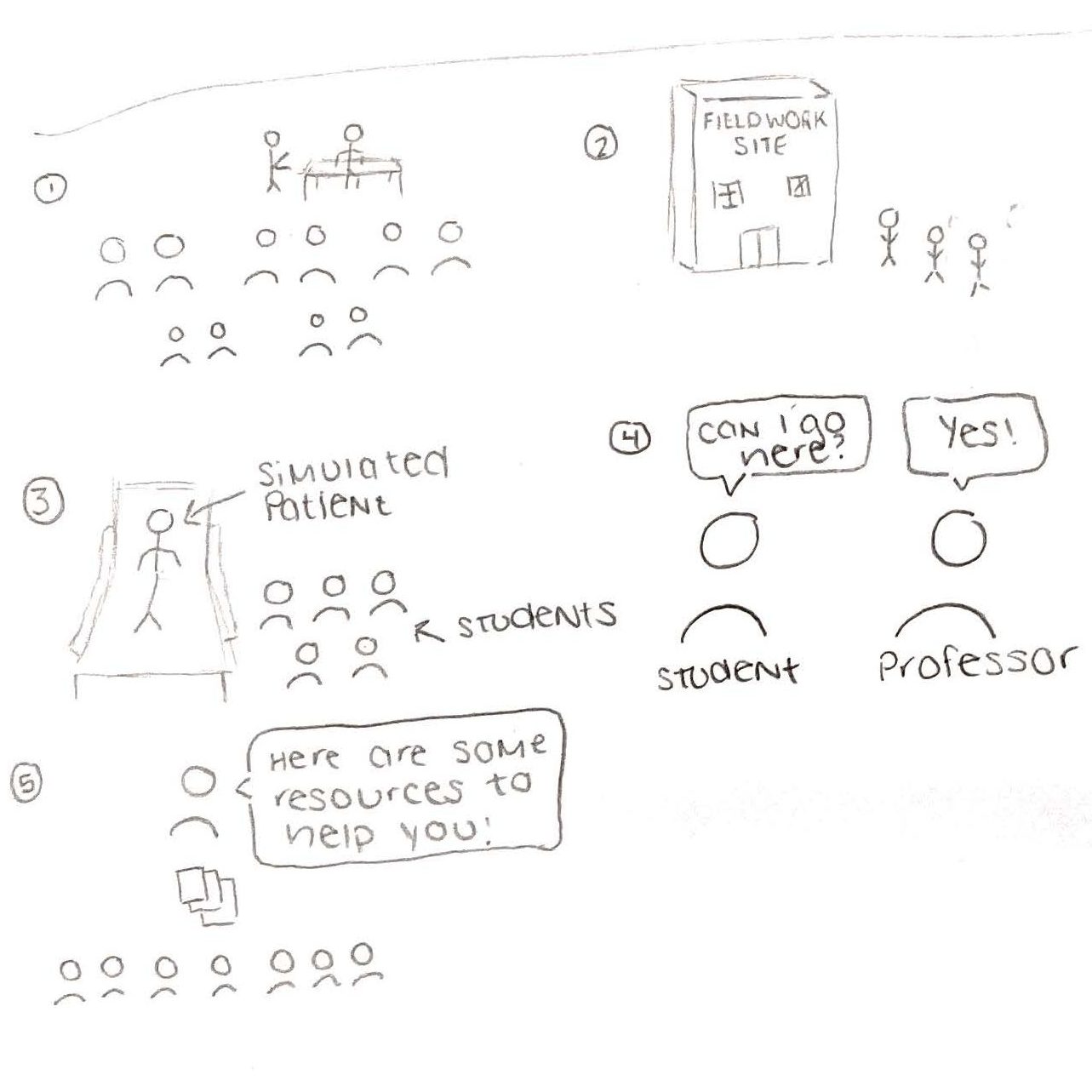
I was then able to present these ideas to Jacob to see which he thought was strongest.
Prototype

Jacob decided that the strongest idea was number one, host small gathering workshops for OT students to be able to practice skills with support from professors. After the ideation phase, I created a “prototype” to demonstrate to Jacob how the solution would work. I just developed a concept sketch to further illustrate the concept to him. With this sketch and an explanation of the concept, I was able to get feedback from Jacob in the test phase.
Test
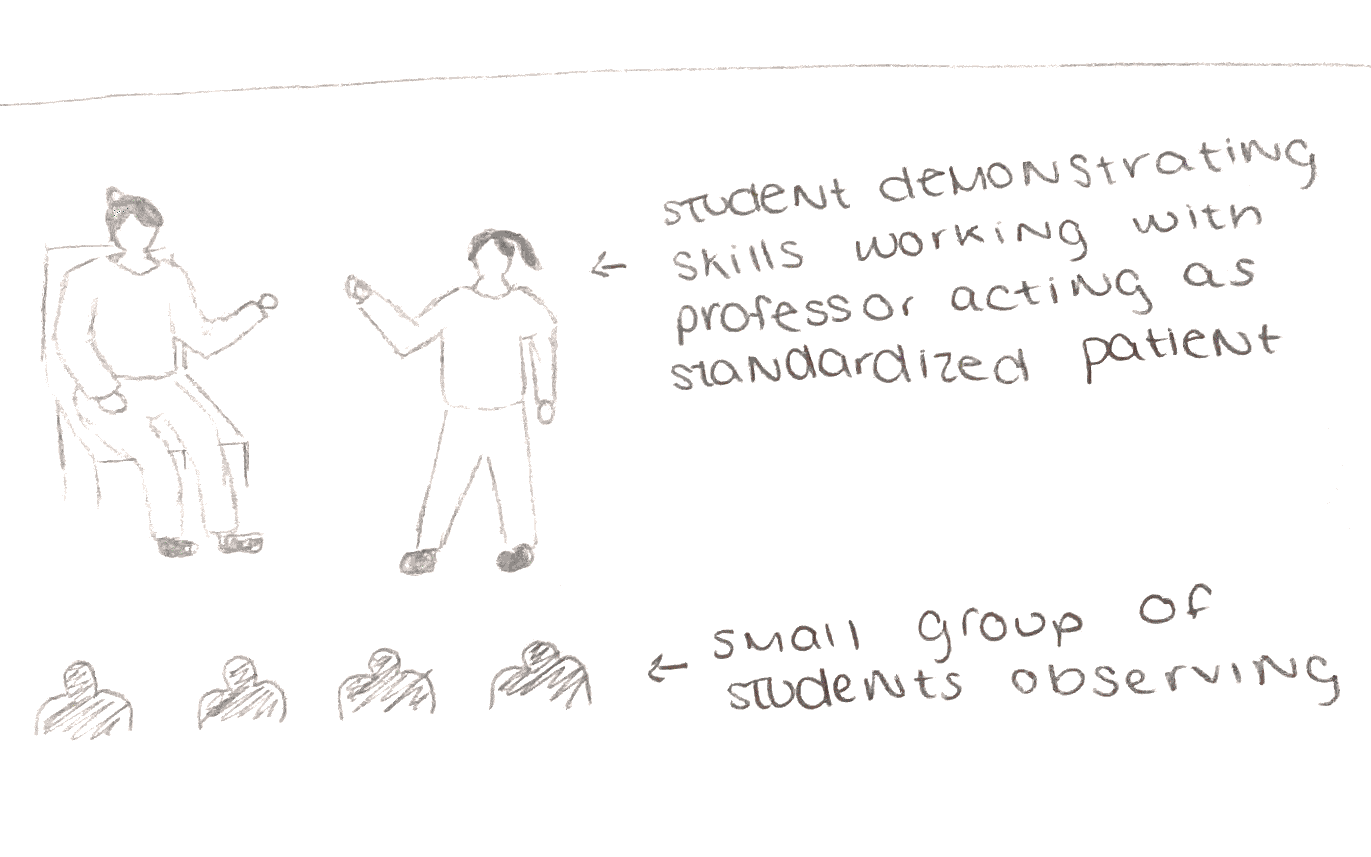
In the test phase, I presented Jacob with the improved concept and explained all of the new improvements that were added following the first feedback session. Then, I collected even more feedback from Jacob on how to make the solution even better.
Conclusion
This crash course assignment provided me with an opportunity to experience all that design thinking has to offer. By conducing each of the stages by myself, I was able to understand what all truly goes into each step to make the process work. I have a new appreciation for the insight and experience that the process of design thinking can provide you with!
 CRyder Design
Leave a comment