
Introduction
For a product to be positively accepted by its audience, it is important that it is designed around the user. If a product is designed without input from its user, it is likely that the audience will have a poor experience when interacting with it. This is why it is important for the design process to be user-centered. Processes like iterative design and the product lifecycle ensure that the user experience is always the best that it can be. The information from the product lifecycle can provide insights for the iterative design process to improve user experience.
Product Lifecycle
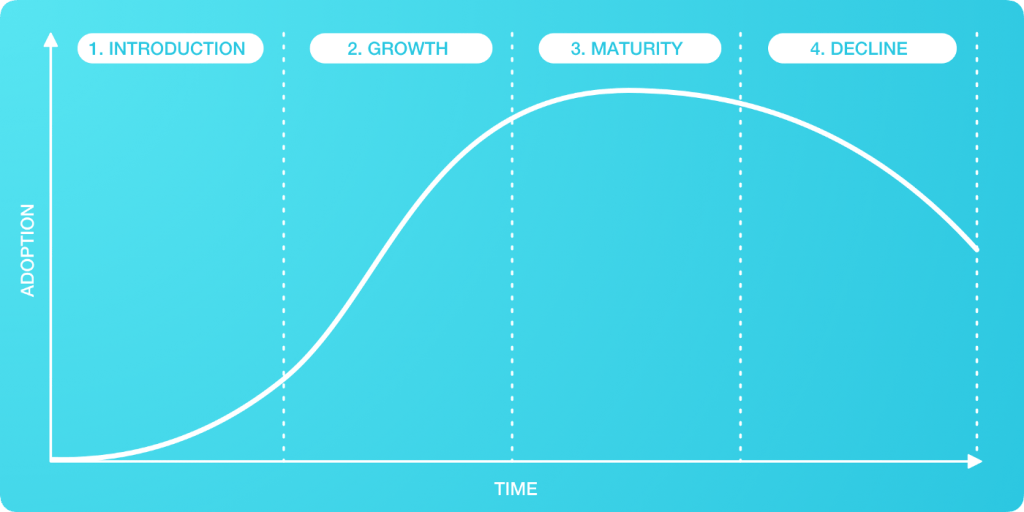
I consider the product lifecycle to be more business-oriented than design-oriented. Most of the insights from the product lifecycle tend to be relating to its success on the market. Author Yoav Farbey describes the stages of the product lifecycle as, “Development, introduction, growth, maturity, and decline.” However, this process is referred to as a “cycle.” Once the product reaches the decline stage, the process repeats itself from the beginning. In order for the process to repeat, more insight needs to be collected about users’ interactions with the product so it can be redesigned prior to a rerelease.
Iterative Design

Iterative design is often referred to as “rapid prototyping” (“Design Iteration Brings Powerful Results. So, Do it Again Designer!”). In basic terms, it is a back-and-forth process of prototyping and testing a product. With each test, adjustments can be made to the prototype to improve its performance in the following testing phase. The iterative design process does not necessarily have to be instituted prior to the release of a design, and in the context of a conversation regarding product lifecycle, it can be utilized after a product has already begun to decline. In regard to product lifecycle, iterative design can be a resource to help make necessary improvements for the product to thrive on the market again.
Working Together
In a real-world situation, it would be ideal to implement the iterative design process as soon as the product lifecycle reaches the decline phase. By doing so, it could potentially minimize how much the product would decline on the market before returning with a new and improved version of the product that could perform better. The more feedback that is collected as to why the product has declined in the marked, the better the improved product would likely perform.
Sources:
https://uxplanet.org/product-life-cycle-product-development-cycle-revisited-a70cff118c7c
 CRyder Design
Leave a comment